
Getting Jackson County Court Records
Gather the basics first. Get the Jackson County case number, the court level, the document name, and a date or event that helps narrow the search. The statewide eCourts Portal then opens the door to public Case Summaries and public document images where those exist. Need a paper file, a document that is not displayed, or an official copy? Go to the Jackson County Clerk of Superior Court. That office keeps the case files for the county's Superior and District Court records. Clerk offices also offer public self-service terminals. State guidance recognizes those terminals as a normal access channel.
- Use Smart Search to identify the record number and distinguish the Case Summary event from the document sought.
- Download a public Portal document one at a time if the image is available and an informational copy is enough.
- For a Jackson case-file copy, call, visit, or write the Clerk of Superior Court with the case number, party names if needed, court, document, date, and plain or certified-copy request.
- Use the clerk’s published payment instructions for a copy or court obligation. Do not assume a universal local request form or processing time because neither was located.
- For a Judicial Branch administrative record rather than an individual Jackson case file, use the written NCAOC public-record channel.
The North Carolina court-records access source lays out every channel: the clerk, terminals, paper files, transcripts, and recordings.
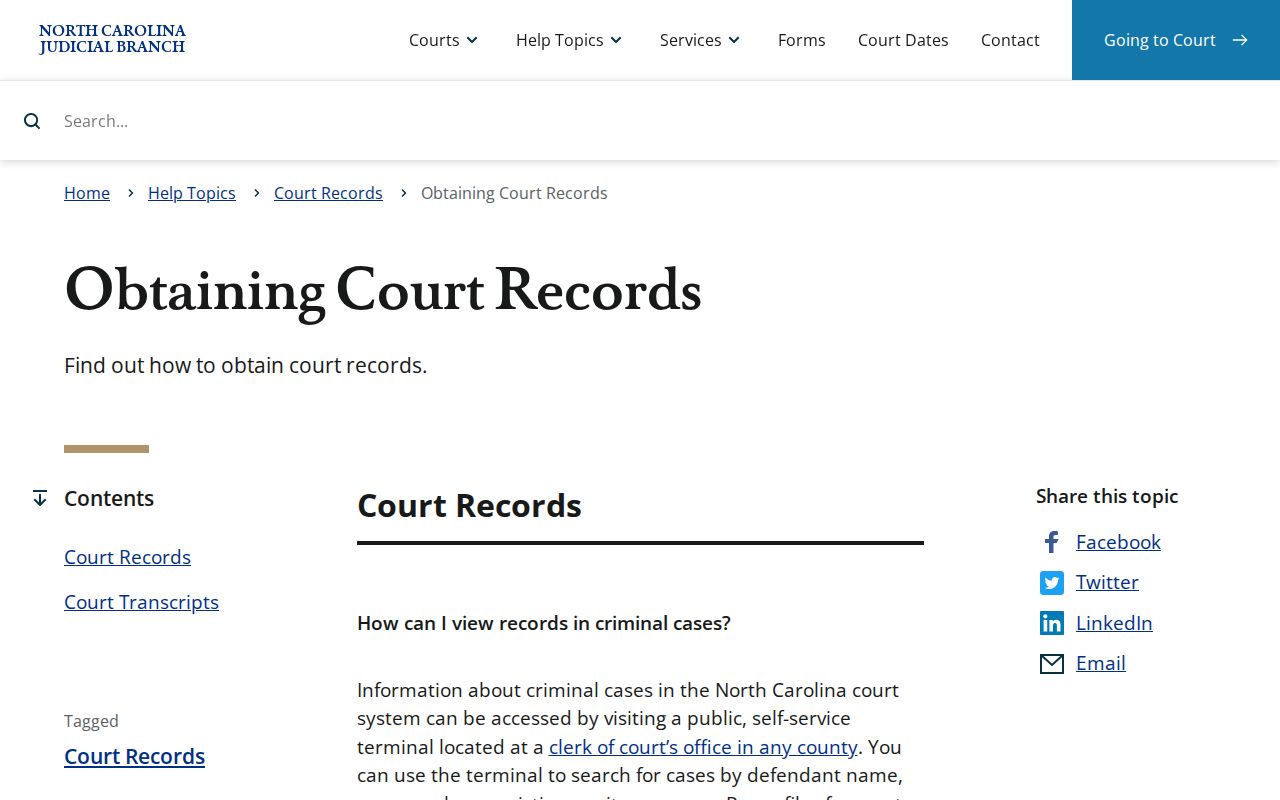
That statewide framework sends each requester to the county where the case was filed. For Jackson County, that keeps the local clerk at the center of any case-file request.
Jackson Court Record Custodian
Jackson County operates under North Carolina's unified clerk structure. There is one office. It is the Jackson County Clerk of Superior Court, not separate county and district record keepers. That office holds civil actions, criminal actions, special proceedings, estates, judgments, dockets, and indexes for the local state trial courts. The clerk's custodian role makes it the right stop for a certified case document or any file missing from the Portal. G.S. 7A-109 sets the recordkeeping baseline. The assigned official statute source spells out the clerk's duties for files, dockets, and indexes. It also covers the public-inspection rule and its lawful exceptions.
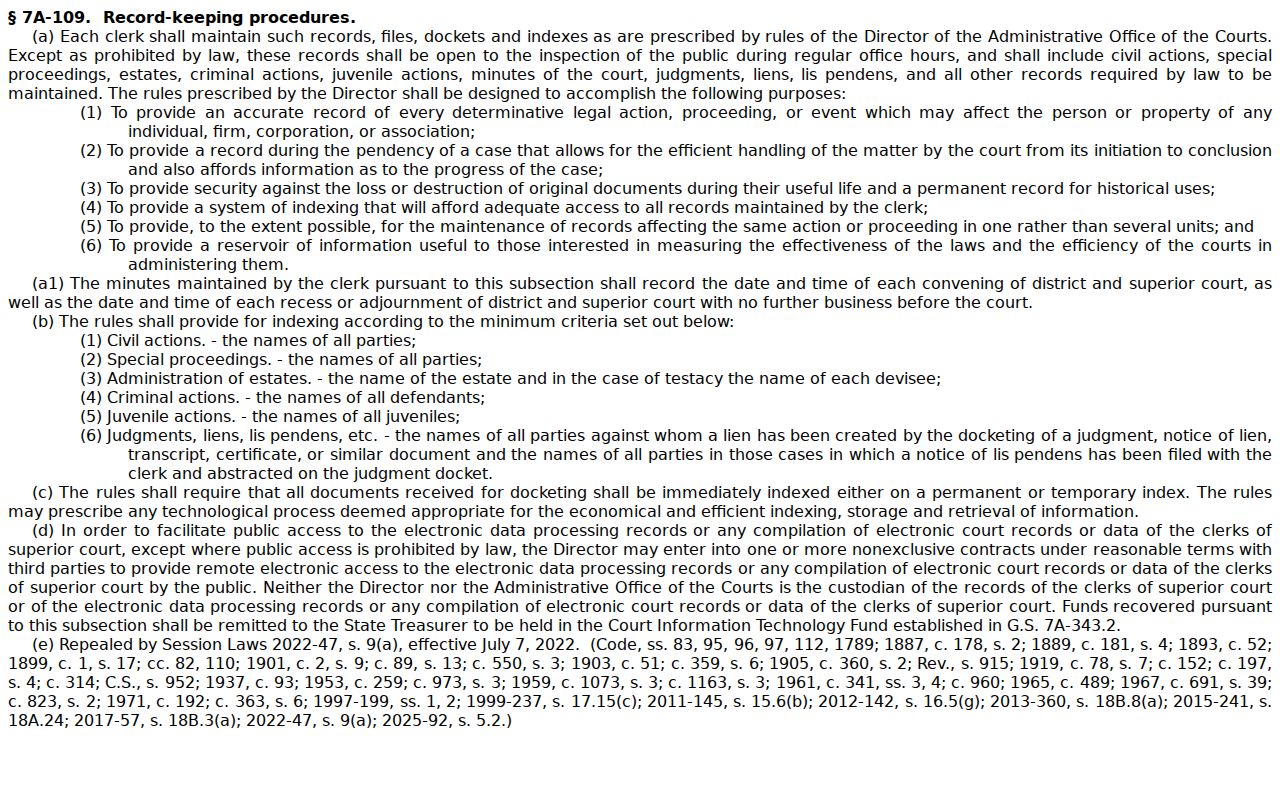
The statute opens the door to lawful public records. It does not unlock sealed, juvenile, expunged, or otherwise restricted material through a routine request.
Court Record Types
"Court record" covers more than the docket view. A Jackson County user might want an index or Case Summary, a filed pleading, an order, a judgment, a clerk-issued certificate, or a separate transcript or audio record. Each type sits with a different custodian. Name the record precisely and the request lands in the right place instead of asking the Portal to do work it was never built for.
- Case Summary or Register of Actions: public chronological case information in Portal, where available.
- Filed document: a pleading, motion, order, judgment, or other item in the Jackson case file.
- Plain clerk copy: an informational copy made from the county file for the applicable fee.
- Certificate under seal: a clerk-issued official certification, distinct from a Portal image.
- Transcript or recording: a separate court-reporter, transcriptionist, or clerk-recording request.
Jackson Portal Court Record Limits
The Portal shows public docket entries and public documents. But that applies only where the record is not confidential, sealed, or restricted. Treat it as a viewing channel. It is not the official court record itself. Public documents may appear as separate downloads, yet a Case Summary event can exist with no downloadable document attached. A missing image does not prove the filed item never existed. The assigned North Carolina public-records law explainer covers inspection, copying, redaction, and one firm limit. A public agency cannot be required to create a record.
Want an official Jackson County document? Ask the clerk for the specific record and say whether it needs a certificate under seal.
Inside a Jackson County Court Record
What is inside depends on case type and public-access status. Portal guidance draws a clear line. The Case Summary holds public case information, and the documents sit in the case file. A civil matter may hold a complaint, an answer, motions, and orders. A criminal or infraction matter may show Case Events, Hearings, Dispositions, and Financial Information when applicable. Do not assume every field or document appears in every Jackson County record.
| Case number | The Enterprise Justice identifier used to locate the Jackson file. |
|---|---|
| Case Summary | Public Register of Actions, including available chronological Case Events. |
| Party and assignment information | Public case-level details displayed when available and lawful. |
| Pleadings and orders | Filed documents that may be public online or available through the clerk’s file. |
| Hearings and dispositions | Scheduled-setting and outcome information where Portal displays it. |
| Certification | A clerk service for an official record, separate from viewing a Portal image. |
Jackson Court Record Requests
A written public-record request does not automatically reach every court file. The North Carolina Administrative Office of the Courts, or NCAOC, asks that requests be in writing. Its policy covers only the records it holds. It is not the universal custodian of individual county case documents. For a Jackson case file, send the request to the Jackson Clerk. For an administrative Judicial Branch record, use the NCAOC channel. Describe the existing record requested there. The assigned Judicial Branch public-record request source explains the state routing process.
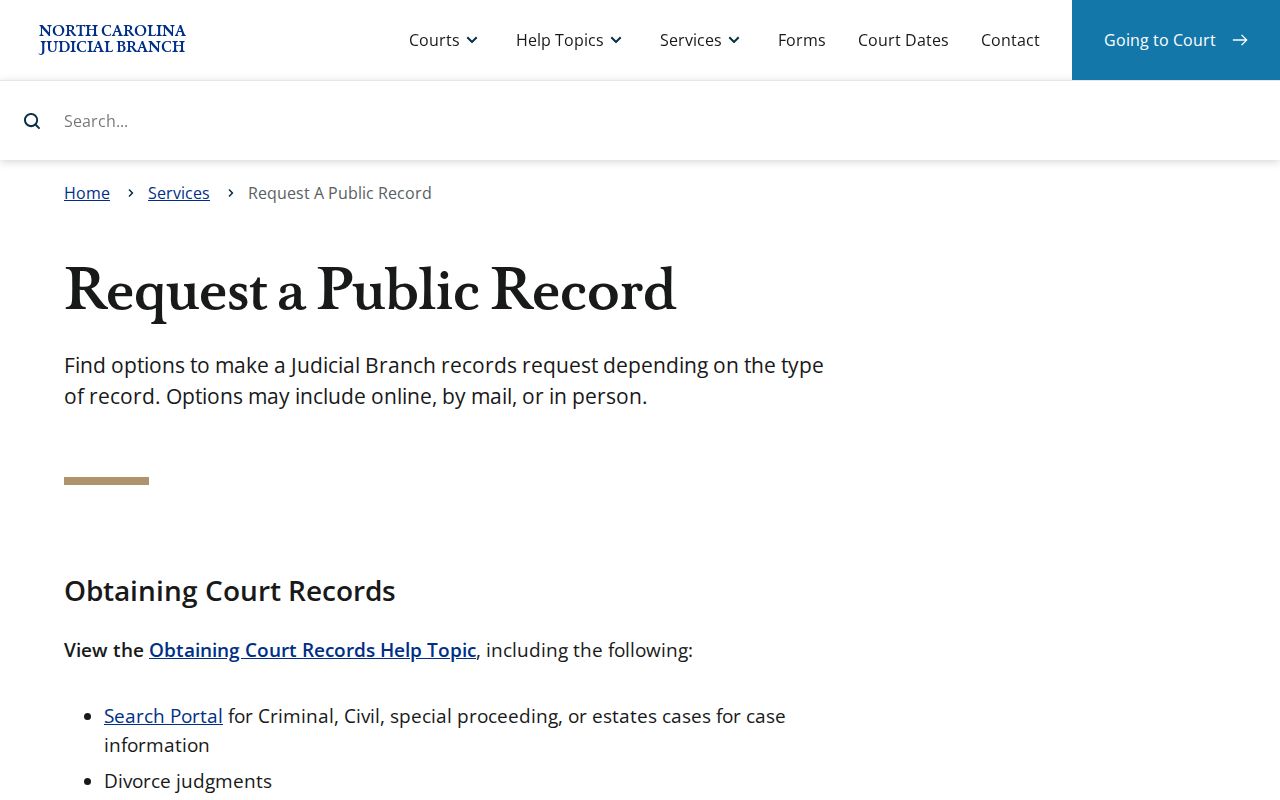
The separate NCAOC policy source explains the written-request and custodian distinction.
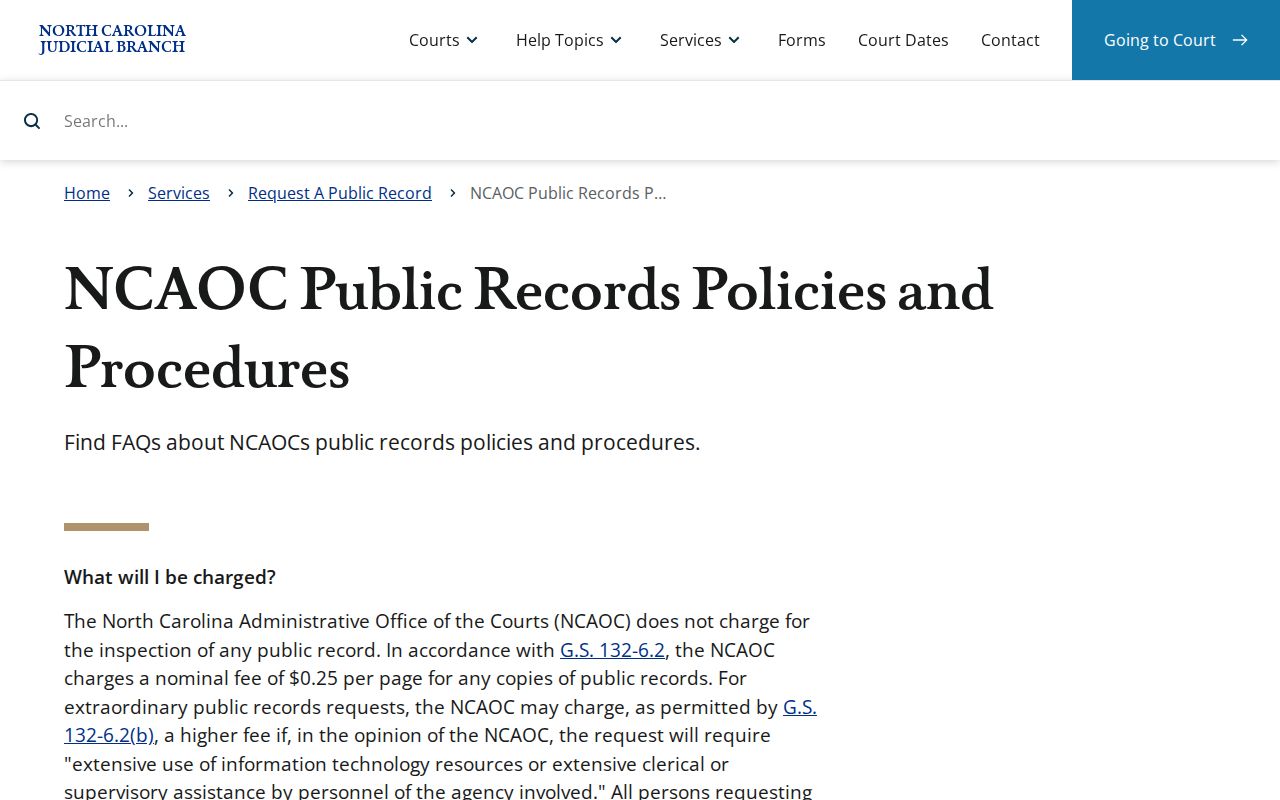
Keep the two paths separate. A statewide agency request never substitutes for a local clerk request for a Jackson case document.
Fees and Certified Copies
A plain copy is not a certificate under seal. The current official miscellaneous-cost chart, effective January 1, 2025, lists $2.00 for the first page of each document and $0.25 for each additional page or fraction. A certificate under seal carries a listed fee of $3.00. Confirm the amounts with the clerk before payment. These figures cover preparation and certification only. They promise nothing about whether a particular document is available.
| Jackson case-file item | Located amount | Important distinction |
|---|---|---|
| First page of each document | $2.00 | Current-chart amount; confirm before ordering. |
| Each additional page or fraction | $0.25 | Applies after the first page of that document. |
| Certificate under seal | $3.00 | Clerk certification, not a general Portal printout. |
| Exemplification | $10.00 | Separate listed clerk service. |
| Transcript-of-judgment preparation/docketing | $10.00 | Not a court-reporter hearing transcript. |
Jackson County Clerk of Superior Court
401 Grindstaff Cove Rd.
Sylva, NC 28779
Jackson Court Transcript Records
A transcript is not the same thing as a docket sheet. It is a typed word-for-word record of what was said. A court reporter or approved transcriptionist prepares it, and the rates are set separately. Did the clerk or a digital technician make an audio recording instead? A nonconfidential request can go through the statewide AOC-G-114 path. A confidential case needs court permission first, using AOC-G-115. No single Jackson transcript price or universal local turnaround time applies.
Ask one question before anything else. Do you need the order, the docket entry, a filed document, the audio, or the transcript? The answer tells you which channel fits. It might be the Portal, the Jackson Clerk, the court reporter, or a recording request.
The public courthouse path in Jackson County also works differently from a transcript request. A clerk can pull the case file and make a lawful copy. The clerk cannot turn a Case Summary into a verbatim transcript, though. Is the proceeding you need unclear? Gather the hearing date, the courtroom or judicial officer if known, and the case number. Do that before contacting the right records channel. That way a request for the filed order will not get confused with a request for the spoken proceeding.
Sealed Records and Public Access
North Carolina's public-access rule still bows to statutes and court restrictions. Public Jackson County case information can be searched anonymously through the Portal. Public self-service terminals offer another lawful path. Registering an account or filing a general request does not open restricted categories. Juvenile files, expunction files, sealed material, unreturned warrants, and certain protective-order information all carry different access limits.
Key rules:
G.S. 7A-109 requires clerk-maintained court records and public inspection unless another law prohibits access.
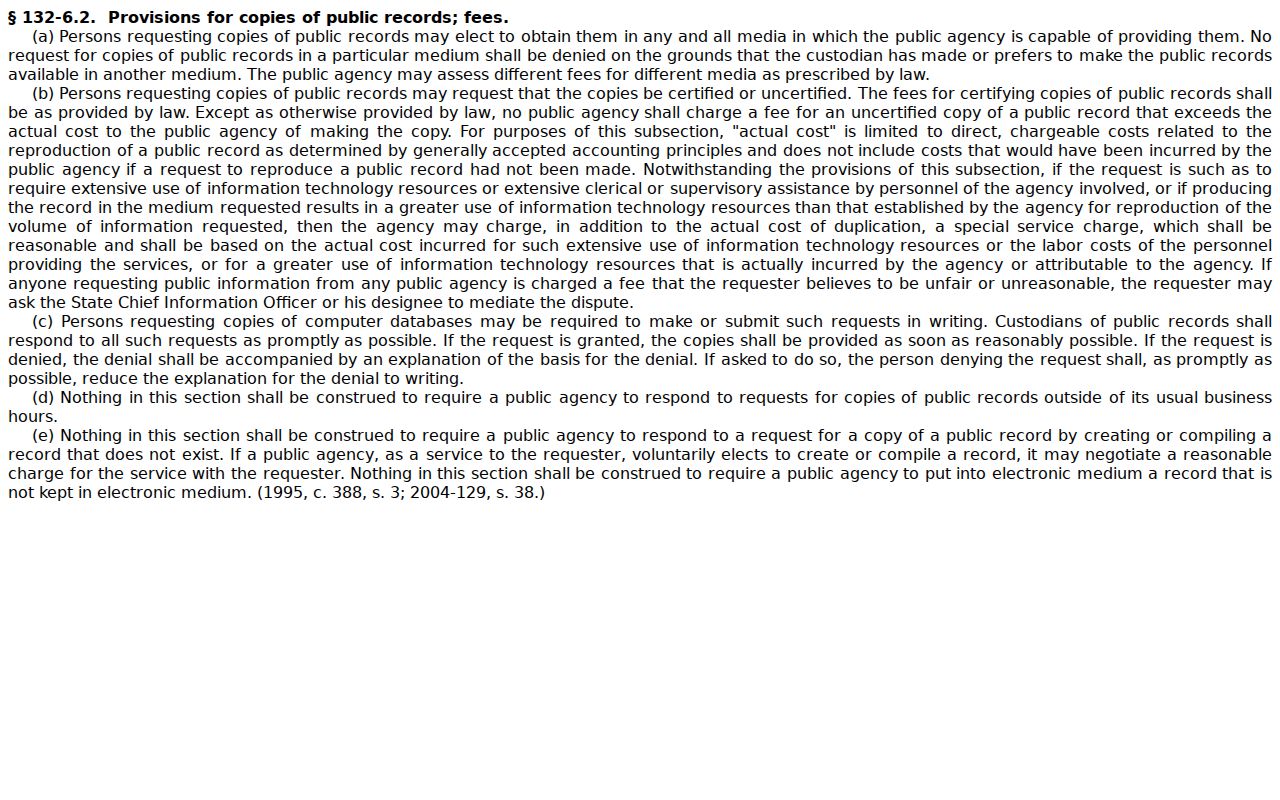
G.S. 132-6.2 provides the public-record copying and special-service-fee framework.
G.S. 7B-3000 limits public inspection of juvenile records.
G.S. 15A-151 makes expunction files confidential with narrow disclosure limits.
Jackson Court Record Copy Rules
Looking at a record and copying it follow different rules. The NCAOC policy treats inspection of records it holds as free. Its ordinary copies generally run $0.25 per page. The Jackson clerk, by contrast, is the custodian for an individual county case file. That office follows the court-fee chart. Requests for specially created work or bulk data do not flow automatically from the public-record statute. Nor should anyone assume a turnaround prediction or trust an unverified local form.
For the authoritative language on copying and permitted special-service charges, see the assigned G.S. 132-6.2 source, which spells out what agencies may charge.
Mail nothing yet. Before sending payment or trusting any fee, confirm the current amount and the delivery method. Also confirm whether the Jackson Clerk actually holds the public record you want.
Jackson County's three access layers still help when one route fails. The Portal carries current public case information. The clerk or a public terminal covers the county file. The NCAOC request route handles administrative records that agency itself holds. Pick the custodian before you send anything. That way a court-file search is not delayed by a statewide routing mismatch.